Artificial Intelligence
Inside the New AI Infrastructure Arms Race: Chips, Power, and Data Centers
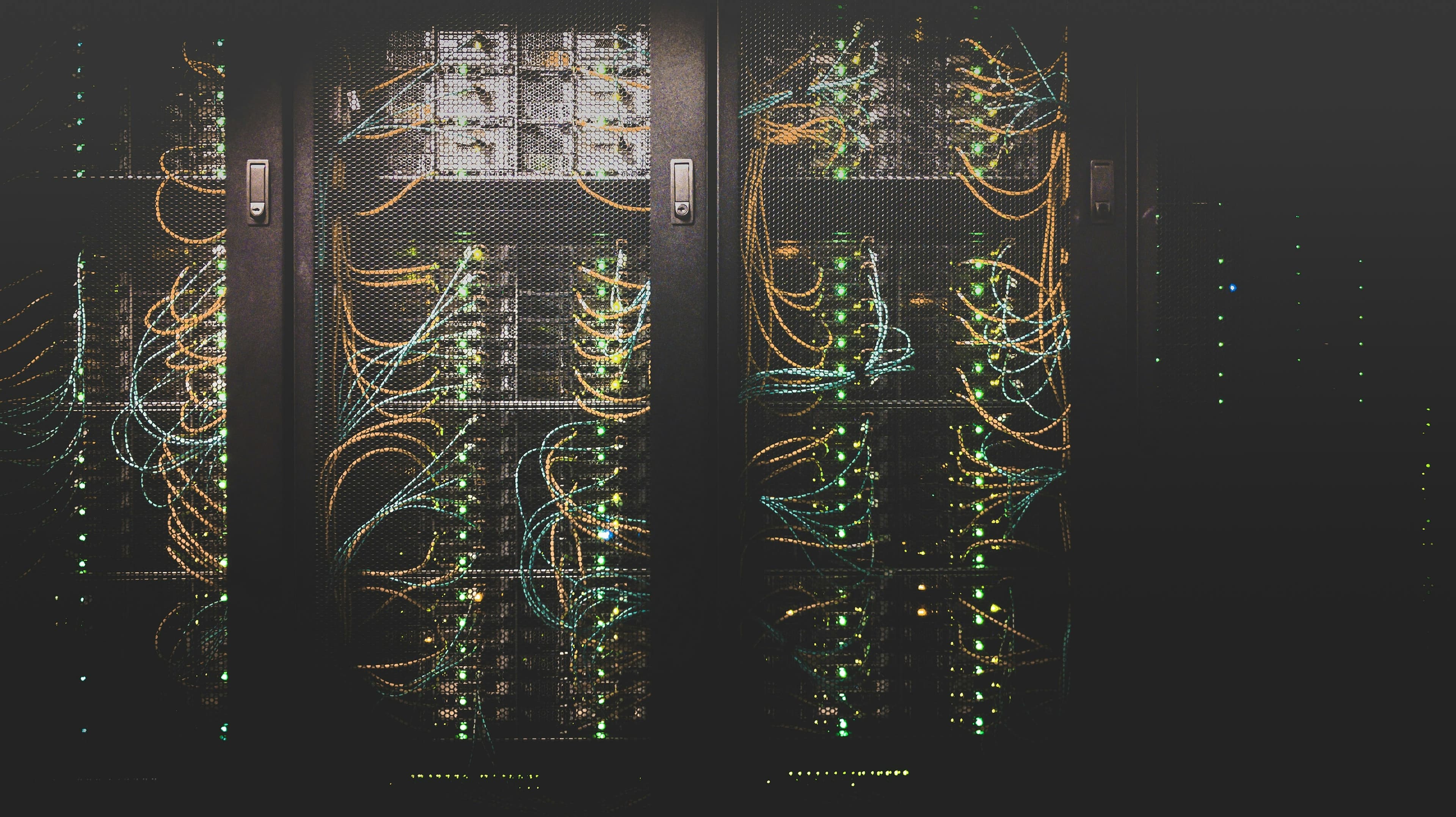
The AI race is no longer just about who builds the smartest model. Tech companies are competing for GPUs, data centers, electricity, networking equipment and cooling capacity. Here's why AI infrastructure has become the industry's next major battleground.
The artificial intelligence race has entered a new phase. For years, the competition was largely about building better AI models. Now, the biggest technology companies are fighting over something more physical: chips, electricity, data centers and the infrastructure required to run AI at massive scale. The shift is already visible in the numbers. The International Energy Agency says capital expenditure by five large technology companies exceeded $400 billion in 2025 and is expected to increase by another 75% in 2026. Meanwhile, Gartner forecasts that global data-center electricity consumption will reach 565 terawatt-hours in 2026, up 26% from 2025.
What Is the AI Infrastructure Arms Race?
The AI infrastructure race is the competition to secure the computing hardware, data centers, electricity, networking, cooling and other physical resources needed to train and operate increasingly powerful AI systems. The companies that secure enough infrastructure can potentially deploy AI services faster and at larger scale.
Why AI Needs So Much Infrastructure
Modern AI models require enormous amounts of computing power. Training frontier models can require huge GPU clusters, while serving millions of users also requires continuous inference capacity. As AI agents and reasoning systems become more capable, the amount of compute required to operate them can increase further.
The Race for AI Chips
GPUs and specialized AI accelerators are at the heart of the infrastructure race. NVIDIA remains a dominant supplier, while companies including Google, Amazon and Meta are investing heavily in custom AI silicon. Custom accelerators can be optimized for specific workloads and help major cloud companies reduce dependence on general-purpose GPUs.
NVIDIA's Rubin Chips and the Next Generation of AI Compute
NVIDIA's Vera Rubin platform is designed to support massive AI factories and million-GPU-scale environments. NVIDIA says Rubin-based products are expected to become available through partners in the second half of 2026, with AWS, Google Cloud, Microsoft and other providers among early deployers.
Why Data Centers Are Becoming the New AI Battleground
AI data centers are not ordinary server facilities. They require high-density computing, advanced networking, specialized cooling and enormous amounts of electricity. Companies that can build these facilities quickly and connect them to reliable power can gain an important advantage in AI deployment.
The Electricity Problem Behind AI
Power availability is increasingly becoming a constraint on AI expansion. Gartner expects worldwide data-center power demand to rise 27% in 2026, reaching 132 GW. In some markets, obtaining a sufficiently large and reliable electricity connection can take longer than acquiring computing hardware.
AI Data Centers Need More Than GPUs
A modern AI facility requires much more than processors. Operators need networking equipment, memory, storage, power distribution, backup systems, cooling equipment and physical buildings. The Semiconductor Industry Association estimates that semiconductors account for about 95% of the value of an AI data-server rack when the full stack of chip technologies is considered.
The Cooling Challenge
High-density AI servers generate significant amounts of heat. Traditional air cooling becomes increasingly difficult as computing density rises, making liquid cooling and other advanced thermal-management technologies increasingly important for next-generation AI facilities.
Why Big Tech Is Spending Billions on AI Infrastructure
Companies such as Microsoft, Google, Amazon and Meta are investing heavily because AI services require reliable compute capacity. Infrastructure investment can give them greater control over their AI workloads, reduce dependence on external capacity and provide room for future model growth.
The Rise of AI Cloud Infrastructure Companies
Specialized providers are also becoming important in the infrastructure race. CoreWeave, for example, raised its 2026 capital expenditure forecast to $35–$39 billion after reporting strong demand for AI computing. Its second-quarter backlog reached $104.2 billion, demonstrating how much demand exists for additional AI capacity.
NVIDIA's $500 Billion AI Infrastructure Financing Push
NVIDIA recently announced partnerships with major financial firms to create financing platforms designed to mobilize more than $500 billion of third-party capital for AI compute infrastructure. The initiative shows that financing itself is becoming part of the infrastructure race.
The AI Infrastructure Supply Chain
The AI buildout depends on a huge network of suppliers, including semiconductor manufacturers, memory producers, chip-equipment companies, networking vendors, power equipment manufacturers, data-center operators and energy providers. A shortage in any one part of the chain can delay an entire AI project.
Is Electricity the New AI Bottleneck?
Increasingly, yes. AI companies can order GPUs and build facilities, but those facilities cannot operate without sufficient electricity. Gartner describes power availability as a new battleground for scaling AI capacity, while the IEA reports growing pressure on electricity systems from data-center expansion.
The Competition for Custom AI Chips
Major technology companies are developing their own accelerators to complement or reduce reliance on merchant GPUs. Google has its TPU ecosystem, Amazon develops Trainium and Inferentia, and Meta is investing in its MTIA processors. This could make the AI chip market more diverse as workloads become increasingly specialized.
What Happens If AI Infrastructure Grows Too Fast?
Massive infrastructure spending carries financial risks. Data centers can take years to build, power connections can be delayed, AI hardware can become obsolete, and demand forecasts may prove too optimistic. Companies must balance the need to secure future capacity against the possibility of overbuilding.
Who Wins the AI Infrastructure Race?
There may not be a single winner. Chip designers, semiconductor manufacturers, cloud providers, data-center operators, networking companies, energy suppliers and power-equipment manufacturers can all benefit from the buildout. The biggest advantage may ultimately belong to companies that control several parts of the infrastructure stack.
The AI industry is undergoing a fundamental transformation. In the early years of generative AI, public attention focused heavily on model quality: which company had the smartest chatbot, the strongest reasoning model or the best AI benchmark results. But as AI systems become larger and more widely used, the physical infrastructure underneath them is becoming equally important.
A powerful AI model is useless without the computing capacity required to train and run it. That means access to GPUs, AI accelerators, high-bandwidth memory, networking and storage has become strategically important. The same is true for data centers. An AI company can have an excellent model, but if it cannot secure enough compute capacity, its ability to serve customers is limited.
NVIDIA is at the center of this transformation. Its next-generation Vera Rubin platform is designed around large-scale AI factories rather than individual accelerator cards. NVIDIA says its Rubin platform is intended to support massive environments, including future million-GPU deployments, while major cloud providers are preparing to deploy Rubin-based systems during 2026.
At the same time, major cloud companies are building their own silicon. Google, Amazon and Meta are among the companies investing in custom AI accelerators. This does not necessarily mean GPUs will disappear. Instead, the industry appears to be moving toward a more diverse computing environment where general-purpose AI accelerators and specialized chips are used for different workloads.
But chips are only one piece of the puzzle. AI data centers require enormous quantities of electricity, and that is creating a new bottleneck. Gartner estimates global data-center electricity consumption will reach 565 TWh in 2026, representing a 26% increase from 2025.
This creates a surprising situation: in some locations, the limiting factor for an AI data center may no longer be whether a company can purchase enough servers. It may be whether the local power grid can supply the facility with enough electricity.
Power availability also affects where companies build data centers. Developers increasingly have to consider transmission capacity, grid connections, generation resources, land availability, cooling conditions and regulatory approvals before selecting a location. This makes AI infrastructure a much broader industrial challenge than simply buying computer hardware.
The financial side is becoming equally important. NVIDIA's new partnerships with major Wall Street firms are designed to mobilize more than $500 billion in third-party capital for AI infrastructure. The announcement illustrates how the AI buildout is increasingly attracting institutional capital alongside traditional technology investment.
Specialized AI cloud companies are also scaling rapidly. CoreWeave, which builds data-center capacity around NVIDIA GPUs, increased its 2026 capital expenditure forecast to as much as $39 billion. Its $104.2 billion backlog shows how quickly demand for dedicated AI compute infrastructure is growing.
The infrastructure race is therefore becoming a competition across multiple layers. At the chip level, companies want faster and more efficient processors. At the data-center level, they need facilities capable of operating thousands of high-power accelerators. At the energy level, they need reliable electricity. And at the financial level, they need enough capital to build everything.
The result is an AI economy increasingly shaped by physical constraints. Software can be copied almost instantly, but a data center cannot. A new AI chip factory cannot be built overnight, and a power transmission project can take years. This means infrastructure decisions made today could influence which companies have the computing capacity to compete several years from now.
There is also a significant risk of overbuilding. If AI demand continues growing rapidly, today's massive investments could prove necessary. But if AI adoption slows or computing efficiency improves faster than expected, some infrastructure projects could produce lower returns than investors anticipate. The industry therefore faces a difficult balance between building enough capacity and avoiding excessive investment.
Conclusion
The AI infrastructure arms race is changing what it means to compete in artificial intelligence. The next generation of AI will depend not only on better algorithms and smarter models, but also on access to chips, data centers, electricity, networking, cooling and capital. NVIDIA's Rubin platform, custom AI accelerators from major cloud companies, rapidly expanding data-center construction and the growing demand for electricity all point toward the same conclusion: AI is becoming an infrastructure industry. The companies that win the next stage of the AI race may not simply be the ones with the best models. They may be the companies that can secure the compute, power and physical infrastructure needed to run those models at global scale.


